Archive for the 'General Health Tips' Category

The Benefit of Drinking Apple Juice

August 30, 2006

234652767.jpgI usually refrain from taking apple juice because any fruit juice for me is plain sugar. I always have this rule: A fruit is better than a puree… a puree is better than a juice! BUT new studies may change my way of dealing with juices.

A recent study done in University of Massachussets Lowell published in the August issue of the International Journal of Alzheimer’s Disease looked at the effect of apple juice in animal models and its effect in memory.

The FINDINGS are interesting:

The apple juice fed animals had more neurotransmitters produced in the brain important for memory signaling.  Likewise the animals tested did better in memory and learning evaluations.

What’s the implication of the Study in out daily practice?

With the baby boomers reaching the age where we fear the era of forgetfulness… this study is pretty reassuring. The antioxidant properties in apple may have helped in increasing the amount of neurotransmitters in the brain that improved the outcome in terms of memory.

I usually recommend apple as fruit serving to my patients with diabetes because it has a lower glycemic index- meaning it does not significantly increase ones blood sugar.  With this new data on apples… I may have helped them unknowingly in helping preserve their memory!

Other vegetables and fruits may have similar outcome but for now, foods rich in antioxidant properties like apple are known to possess properties that may prevent cognitive decline due to dietary and genetic deficiencies and aging.

An Apple A Day Keeps Your Mind Being Blown Away!

Related Articles:

High Fiber Diet: Any Benefits?

August 28, 2006

imagesfghy.jpgJust talked with a patient regarding her weight and her risk for diabetes and other diseases related to being overweight. Her relative apparently just died of colon cancer. That’s when our focus of discussion shifted to dietary habits and how high fiber diet can help prevent diseases that are now so commonly affecting the health system.

We know that high fiber diet has benefits including preventing constipation, improve bowel function, lowering ones risk to develop diabetes and of course help obesity by decreasing our urge to eat and therefore alleviate hunger. In a recent article published in Nature Clinical Practice Endocrinology, a low fiber diet has been shown to result in rising trend of obesity among children. Likewise, a low fiber diet has also been shown to increase ones risk to cancer especially colon cancer however some studies published in New England of Medicine have not shown beneficial effects of high fiber diet in reducing risk of colon adenomas and cancer.

In the study published in the New England Journal of Medicine, researchers from Southwestern University looked at a very high fiber diet in relation to blood glucose and cholesterol… 2 very important risk factors for heart disease. The 50 gm fiber content in the study was twice the recommended daily intake for fiber by the American Diabetes Assc which is around 25 gms. 

The Results:

A high fiber diet resulted in a decrease of blood glucose by 10%; it likewise decreased the insulin levels and the cholesterol levels as well.

Clinical Implication:

By lowering ones blood glucose and cholesterol, aside from its benefits in weight loss …a high fiber diet can therefore result in reducing ones risk for diabetic complications including heart disease and stroke.

Examples of Fiber that we can incorporate in the diet:

  • Insoluble fiber like wheat bran, nuts and vegetables like okra
  • Soluble fiber like oats, peas, apples, citrus fruits, carrots, psyllium, papaya, grapefruit, cantaloupe

Here’s To A High Fiber Diet for a Healthier You!

Related Articles:

How To Prevent BAD BREATH

August 23, 2006

imageslll1.jpgPatients with diabetes are prone to gum disease. Good blood sugar control helps prevent gingivitis or gum disease but once they develop gum problem comes the dreadful BAD Breath!

The problem with Halitosis or bad breath however is not unique to diabetics.  Even your close friends may have it but not as a result of a disease but because of the more common cause of halitosis : poor oral hygiene.

I recently read an interesting article in The National Institute of Health Medline Plus August issue on a study conducted to determine if flossing helps prevent halitosis.  This study involved a total of 51 subjects: half of them brushed their teeth and tongue 2 x a day while the other half did the same plus regular flossing.

The RESULTS after 2 weeks of study showed that:

The group that did regular brushing plus flossing had 38% reduction in gum bleeding and bad breath.

Clinical Implication:

Just 2 weeks of regular brushing plus dental flossing can reduce gum bleeding and bad breath!

So guys…After brushing your teeth…

To Prevent BAD BREATH… Don’t Forget to Floss!

Hyperacidity or Heart Attack?

August 22, 2006

imagesasdfgh.jpgAlmost always when a patient presents in the ER with massive heart attack, a history of heartburn symptoms were noted days or months prior to the ER visit.  The patient has been complaining of on and off ” heartburn” apparently due to bad food or missed meal symptoms of hyperacidity.  Neglected for days, the patient then presents himself in the ER in an emergency situation.

Practical Tips to know whether you have plain hyperacidity or a serious heart attack:

1. Heartburn tends to occur after meals when you have the most acid being produced, while most chest pains from heart attack occur during times of heavy exertion like exercising, running or doing strenuous activities that require the heart to beat fast.

2. Hyperacidity is burning like sensation in the chest relieved by plain antacid or H2 blocker medications like Ranitidine ( Zantac).  Chest Pain from a heart ailment is more like pressure sensation, squeezing or deep pressure sensation that is often associated with shortness of breath. However if ones burning like sensation is persistent or not relieved by antacid and associated with dizziness, shortness of breath or discomfort… seek medical help immediately as this may mean a more serious heart ailment.

3. If the pain starts to go somewhere else, radiating to the back or down to the left side of the arm… this may signal a heart attack.

4. If you have chest pain of any type and you have risk factors for heart disease especially, Diabetes, or a family history of sudden death in the family, high cholesterol, high blood pressure, and a smoker… then have yourself evaluated for heart disease.

My Recommendation:

A simple exercise treadmill stress testing can help determine if your chest pain is due to heart disease or some other ailment. A cardiologist can do this anytime and the results are out within the same outpatient visit.

Don’t Take Your Chest Pain For Granted… Better Early Than Late!

What You Need To Know About DIETARY SUPPLEMENTS

August 20, 2006

imagesehi.jpgI take my daily multivitamin. Any Vitamin preparation is a dietary supplement. But also those in the market sold as health food supplements such as herbals, amino acids and energy bars.

So, How do we protect ourselves from taking supplements that may be harmful to us?

Based on studies by the the US FDA Center for Apllied Nutrition, some supplements can really help us but they can also harm us. Be aware of the potential side effects of each supplement before you buy especially if you are taking other medications.

Examples of combination of dietary supplements and common medications that we dont recommend:

1. Calcium and Digoxin ( a heart medication)

2. St John’s Wort and Antidepressants

3. Magnesium and Diuretics like Lasix 

4. Vitamin K and blood thinners like Coumadin

Remember the following tips before buying supplements:

1. Avoid supplements with “cure it all” claims- unless the company has been awarded the Nobel Prize for A Miracle Drug.

2. Don’t be fooled by the word: NATURAL. It does not necessarily equate to being SAFE! Any supplement taken in excess can be toxic to the body and harm either the liver or the kidney. Don’t be fooled by these marketing strategies.

3.DO NOT attempt to substitute a prescription medicine for a dietary supplement based on the product claim… this may kill you, physically and financially! They’re also expensive!

A Take Home Message:

– Dietary Supplements ARE NOT intended to treat, prevent or cure a disease or to be used as replacement for healthy food options.

– Do not self diagnose your condition and treat it based on claims. Talk with your doctor as how best to utilize a supplement and how safe it is in combination with your other drugs.

Dietary Supplements Can Be Your Partners in Health or Your Foe!

CHECK OUT THESE RELATED ARTICLES:

Advice on Disciplining Our KIDS…Because They Will Remember!

August 18, 2006

54796148.jpgI am extra careful with regard to disciplining my kids. In certain times of stress… your voice may become loud enough for you to realize later that you need to lower it down a bit! My wife always remind me to take it easy and we resort to non verbal or non contact strategies like no Gameboy privileges or standing in one corner for a number of minutes which usually work!

I thought of sharing with you a certain article that I read related to stress, anxiety and depression in later life and what contributes to them.  Medical News Today  highlighted this particular study by Florida State University which included 5000 subjects between 15 to 54 years of age. 

Verbal abuse included insults, swearing, threats of physical abuse and spiteful comments or behavior.

The FINDINGS: 

1.The study showed that people who were verbally abused as children grew up to be self-critical adults prone to depression and anxiety.

2. People who were verbally abused had 1.6 times as many symptoms of depression and anxiety. 

3. Those verbally abused as a child were twice as likely to suffer a mood or anxiety disorder over their lifetime.

IMPLICATION OF THE STUDY….

As parents therefore, it is our duty to understand that our verbal abuse can have long term effects on our children which can forever affect their lives as adults and as parents….

Avoid calling them names or hurl insults to their behavior because these will forever hurt them… and they will remember!

Be Critical in Disciplining Your Kids…

Think Twice Before You Act! 

The Truth About Vitamin E

August 17, 2006

imagesdtk.jpgI used to take Vitamin E daily. The fad on antioxidants was so noisy that you cant help it but follow the trend. Anyway it’s only a vitamin is the argument!

Due to its antioxidant properties, Vitamin E was touted to provide the promise of heart protector and cancer reducer! Preliminary studies which were ” Chart reviews” or retrospective in nature showed promise! But… again we look for studies that are long term with huge number of subjects to really tell if a drug is worth our penny and our time.

The Womens Health Study is the biggest so far that involved 40,000 women who were followed from 1992 to 2004.  That’s pretty huge number with long term follow up period and therefore the results considered reliable. The study was published in the JAMA in July 2005 with extensive review in the Archives of Internal Medicine.

The FINDINGS:

Vitamin E did not protect women from cardiovascular disease nor did it protect from cancer!

So if you are taking Vitamin E because of its antioxidant properties hoping to help you protect against heart disease and cancer… think again….

Go for the proven remedies…. Don’t go for the shortcut!

Healthy Lifestyle means Healthy Life!

Obesity Genes:Why We Become Obese May Not Be Our Fault After All!

August 16, 2006

imagesftu.jpgWe always think of the equation: what you take in EQUALS what you take out!  A simple equation now being questioned with new findings on studies that this may not be so….

Studies involving twins who ate the same amount of calories had different weights. Subjects given the same quantity of calories- one gained 1 pound a week the other did not. So what made the difference?

New research has shown that Obesity genes now numbering to 50 regulate the way we eat…whether its enough to stop…the way our body utilizes the calories.. and the way fat is built up. This may explain the difference why with so little fuel, some patients gained weight a lot.

Recently… a new cultprit is believed to contribute to this menace… The Microbes just like the way ulcers are made.

In short… it is not ones fault if one has these biological factors causing them to be obese but the whole problem still boils down to too much eating with too little exercise. We may not be able to change the biological makeup, but we can definitely change the way they manifest.

So…It May Not Be Your Fault After All….

…But You Still Take Responsibility Of The Outcome!

The PAINKILLERS and Erectile Dysfunction

August 14, 2006

571729226.jpgNon-steroidal anti-inflammatory drugs (NSAIDs) like Ibuprofen or Advil that we are familiar with have been shown in one study to not only Kill Pain but also Kill your Erection!… Whew… That’s pretty scary!

In a an item in Diabetes Control, 2006… it is a known fact that Diabetics are at highest risk of erectile dysfunction.  However drugs apparently are culprits of causing it too.

This study is the first to note the relationship between chronic intake of painkillers and the higher risk of developing impotence. This study involved 1126 men, between 50 and 70 years of age, without erectile dysfunction in 1994. Arthritis was the most common reason for NSAID use.

FINDINGS:

For whatever reason they were taken…

 NSAIDs increased the risk of erectile dysfunction by 50% 

Although arthritis in itself has been shown to increase ones risk…this study noted that the presence of arthritis without NSAID use increased the risk of erection difficulty by only 30 percent …SUGGESTING  that NSAIDs were largely to blame for the link between arthritis and erectile dysfunction. 

Until further studies are done…before you Grab Another ADVIL….

Better Check….Down Below! Be Sure He’s A OK! 

Being Forgetful Maybe Due To Your Blood Sugar

August 14, 2006

imagessdfg.jpgIf you are a diabetic… or if you have family members who are diabetics… then this post is for you!

We all know the major complications associated with Poor Blood Sugar Control.  We know it can lead to major disabling complications like heart attack and stroke.  Now comes this new finding that links poor blood glucose control and the early problem of forgetfulness!

Are there Vitamins to stop my being forgetful? … is one of the common questions I get from my diabetic patients.  Alzheimer’s or Dementia now becomes a part of why we need to control our blood sugar.

Dr Ronald Peterson of the Mayo Clinic and as spokesman of the Alzheimers Conference noted this study involving 22,000 patients with Type 2 Diabetes and looked at their records from 1997 to 2005.  The HBA1c: a measure of patient’s overall glucose control in the past 3 months were recorded and compared.  The Ideal level should be < 6.5%.

The FINDINGS:

1. Patients with A1c of > 10% but < 12% were 16% more likely to develop dementia.

2. Patients with A1c > 12% but < 15% were 34 % more likely to develop dementia

3. Those with > 15% were 78% more likely to develop dementia.

Suggesting That: 

Those with less well controlled blood glucoses are at high risk to develop early signs of forgetfulness and dementia!

The higher the level of A1C… the higher the risk!

As always…. I have been an advocate of INTENSIVE DIABETES THERAPY because lowering ones A1c to goal has been shown to prevent the onset and progression of complications especially heart disease and stroke…and now a potential benefit would be lowering ones risk to develop DEMENTIA!

Be Aggressive…Avoid Dementia…

Help in The Campaign for Aggressive Sugar Control!

An Interesting Tip To Curb Consumption

August 13, 2006

8750941121.jpgMore interesting tips are coming our way to curb consumption.  The more practical the tips the better for consumers to follow.  The less need to medicate… the better! 

I just spent this weekend with my family at Shangrila Mactan and had dinner at the Tides Restaurant.  This place is famous for its sumptuous food and buffet dinner.  What’s interesting is how the place uses a small plate and after getting only few choices… you feel you’ve taken enough because the plate looks full! Smart move…

It seems to be more than common sense knowledge that small plate will entail less intake but studies need to be done to have these observations confirmed. This new study published recently in American Journal of Preventive Medicine looked at partygoers and see if size matters with regard to the bowl and utensils they have and the amount of food they eat!  An amusing study but really interesting….

The researchers provided the subject with either a 17 ounce or 34 ounce bowl as well as a 2 or 3 ounce serving scoops.  They were told to get the ice cream themselves.

THE RESULT:

Doubling the size of the serving bowl resulted in a 34% increase in consumption!

This study supports the fact that environmental factors affect the way we eat. Visual Illusion working overtime here… 2 scoops of ice cream may be too much for a small bowl but it may seem too little in a big bowl. Two scoops using a small ice cream scoop may be enough but 1 scoop from a big scoop utensil may be too little!

There you go…Change Your Plates!

Every Little Step Goes A Long Way! 

The Tylenol Controversy

August 12, 2006

imagesdfghhjj1.jpgI take tylenol everytime I have a headache.  I use Tylenol for my fever.  I use Acetaminophen or Paracetamol if my kids have fever! They are all the same with acetaminophen as the generic brand of Tylenol.


The recent controversy surrounding this drug started when an article published in Journal of American Medical Association in July of 2006 reported an increase risk of liver damage with intake of acetaminophen.

THE FINDINGS:

1.  Taking more than 4 gms of acetaminophen per day increases the risk of liver damage with 40% of study population having a 3 fold increase in liver enzymes considered a danger zone!

2. Taking the above dose for long periods of time from 3 days to 2 weeks (especially those with chronic pain and arthritis) increases the risk of liver injury.

3.  Taking other medications together with a high dose of acetaminphen increases the risk further.

The good news is:

The liver injury recovers with cessation of intake!

My recommendationS:

1.Take tylenol only as needed for headache or pain.

2. Do not exceed more than 4 gms per day.

3. Do not exceed taking it more than 2 to 3 days!

Read The Labels…Do Not Exceed The Limit!

Calcium, Vitamin D and Diabetes

August 10, 2006

1429976821.jpg Every morning before I start my work, I usually review my journals, read blogs and then scan for interesting topics about diabetes and health matters. Sorting studies whose results impact our decision making takes top priority making sure that the source comes from a reputable institution published in a reputable journal! So if somebody approaches me regarding the effect of this herbal preparation published in thick magazine which we consider “throw away journals”, these studies are labeled JUNK and not worth a first look.

A study published in Diabetes Care , March of 2006 looked at the intake of Vitamin D and Calcium and the risk to develop diabetes.  Researchers enrolled 83,000 women in the Nurses Health Study and were evaluated for a total duration of 20 years.  Huge number of subjects and long term follow up are parameters of a good study.

Interesting Facts from the Study:

1. Only 3 % had adequate Vitamin D intake. See My Post on Vitamin D… Low intake plus low sun exposure equals Vitamin D Deficiency.

2. Only 24% of the subjects had adequate Calcium Intake. Not a surprise…How many of our women readers are taking calcium supplements?

3. Among the subjects with the highest Vitamin D Intake, the risk to develop diabetes was 13% lower.

4. The subjects with the highest Calcium intake had 21% lower risk to develop diabetes than those who had the lowest intake. The result was irregardless of which calcium supplements were taken!

In Clinical practice…I always recommend calcium and Vitamin D to all my women patients irregardless of age to prevent osteoporosis ( brittle bones resulting in curved back and fractures).  Now this study further helps these women be more compliant to their intake of calcium and Vitamin D as a way to reduce ones risk to develop Diabetes.  Remember Diabetes is already an epidemic that is estimated to increase in prevalence to affect 300M individuals by year 2020.

A daily Multivitamin with 400 IU of Vitamin D plus elemental calcium from whatever calcium source 2 times a day should suffice.

Calcium and Vitamin D:

Our Partners In

Disease Prevention

If You Are Obese…Check Your Prostate!

August 4, 2006

19207111352.jpgBenign Prostatic Hypertrophy (BPH) is a common dilemma among men. A recent article from the Journal of Clinical Endocrinology, July 2006 issue showed that there is a relationship between ones weight and that person’s risk to have an enlarged prostate.  BPH is a condition that leads to difficulty in urination with symptoms ranging from urgency, discomfort, to incomplete voiding.

The study showed that of the men with enlarged prostates, majority were heavier and had a higher age-adjusted body mass index (BMI) than men without enlarged prostates. It was estimated that for each 1-point rise in BMI was associated with a 0.41 cubic centimeter increase in prostate volume.  Such that very obese men were especially likely to have an enlarged prostate, with 3.5-times the risk compared with their normal-weight counterparts.

In the same study, diabetics were more than twice as likely to have prostate enlargement compared with men without diabetes such that those with elevated glucose had 3-times the risk of having an enlarged prostate. The clinical implication of this study is that with the current epidemic of obesity and diabetes, this finding will have a definite impact in the rising prevalence of BPH.

So Guys… Another reason for us to take care of our weight!

Lose Weight, Control Your Sugar

Or Else…

Want To Live Long?

August 3, 2006

2837158878.jpg We all know the benefits of being active. We likewise know the ill effects of a sedentary lifestyle. But as more concrete data on the benefits of physical activity come our way, the better informed we are about it!

In a recent article published in the Journal of American Medical Association this July comes a very timing article… at this time that the world is embracing a worldwide epidemic of obesity!

This is the better study so far analyzing the effect of exercise. The study showed that for every 287 kcal/d in free-living energy expenditure, there is an approximately 30% lower risk of mortality. This estimated energy expenditure is equivalent to performing 75 minutes of activity a day .

Some activities of daily living that can meet this metabolic equivalent include household chores like vacuuming, mopping the floor, and washing windows; child / adult care, walking at a pace of 2.5 mph, and non-sitting work, or volunteering. Of note, this accumulation of energy expenditure from activity comes from the usual daily activities and not necessarily from volitional exercise.

The study therefore has one clear message:

That Energy Exependiture From Activities of Daily Living like Walking, Climbing Stairs, or other Household Chores can enhance ones SURVIVAL!!!

No More Excuses…You Can Be

Active Anytime…Anywhere!

Are Artificial Sweeteners Safe?

August 2, 2006

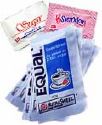
2383658624.jpg This fact sheet on sugar substitutes was recently published in the US FDA July issue titled: No Calories…Sweet!

In a recent survey done among users of sugar substitute, the primary reasons for using these products is “to stay in overall better health” in 73% of the respondents and “to eat or drink healthier foods and beverages” in 68% of those surveyed.

There are so far five FDA-approved sugar substitutes namely aspartame, acesulfame K, neotame, saccharin and sucralose. As stated clearly, the FDA notes that “For each of the approved sweeteners, the typical amount used by U.S. consumers is well within designated ‘acceptable daily intake levels (ADI),’ or levels that can be consumed safely every day over a lifetime.“

Furthermore the FDA further emphasized the benefits of using these products: “Artificial sweeteners can help consumers cut down on calories and control weight, help to manage chronic conditions such as diabetes, and potentially prevent cavities.” 

Likewise, as an endocrinologist, I usually recommend to my patients to control calories with sugar-free and light foods and beverages, with exercise, as very effective ways to help them control or lose weight without necessarily feeling deprived!

Lastly, in terms of safety issue: both the US FDA and the European Food Safety Authority have come up with the same conclusion: Aspartame is safe until proven otherwise by scientific data. 

No Calories…Really Sweet!

Check Your Numbers: Are You Obese?

August 2, 2006

2459156720.jpg We’ve been talking about the risks of obesity.  We know the prevalence is increasing worldwide.  We know the reasons… But Are We Obese?

Body Mass Index is one simple way to determine if you’re overweight or already obese.  It can be calculated as follows: Weight in Kg divided by your Height in centimeters times 2. Try computing your BMI and see where you belong.

The following are the different levels of BMI in adult Asian Population based on the International Obesity Task Force for the Asia Pacific with the Waist Circumference and the corresponding Risk for Co Morbidities like Hypertension, Diabetes and Heart Disease:

                                                               Waist Circumference

                                                  < 35 inches ( men)             > 35 inches

                                                  < 31 inches ( women)        > 31 inches

Underweight  :        < 18.5                  Low                             Average

Normal Range :        >18.5 to 22.9       Average                        Increased

Overweight   :         >23 to 24.9          Increased                      Moderate

Obese I         :           25 to 29.9         Moderate                      Severe

Obese II        :          > 30                   Severe                         Very Severe

Once you know where you belong… you know what to do! Remember, the risk to develop the diseases associated with lifestyle due to bad habits is closely related to how heavy you are.  And the risk to develop obesity and its associated co-morbidities can be reversed if we act now thru lifestyle changes to include proper food choices and constant daily activites.

Know The Numbers Then Do

Something About It!

The PILLS and The Risk Of Heart Disease

August 2, 2006

Imagesase I received a very important query regarding the risk of heart disease among OCP users.  A lot of married couples not wanting for more babies are using OCP so I thought of sharing this news bit in terms of what the scientific community thinks with regard to this issue. 

A study published in The Sterility and Infertility 2006 Issue involving 672 postmenopausal women who participated in the Women’s Ischemia Syndrome Evaluation (WISE) showed that Past oral contraceptive use was associated with a reduction in coronary artery disease severity. The observation held true even after accounting for a variety of potential confounders, including age, diabetes mellitus, lipid profile, smoking, aspirin use, and use of lipid-lowering agents.  Likewise, the duration of past oral contraceptive use appeared to have no bearing on the extent of reduced coronary disease seen.

While the study suggests a potential protective effect for past oral contraceptive use, further studies have to be done to confirm this important finding.

For now… this is the first observational link between OCP and Cardiovascular Disease and the results are reassuring to our women OCP takers.

OCP Takers…Be Reassured!

The Benefits Of Drinking MILK

August 2, 2006

3043116279.jpgA glass of milk is really a good prescription for health.  Heres why….

 For the prevention of osteoporosis, a high calcium intake is recommended especially for women. It is recommended that a daily intake of low fat milk or skim milk with 2 glasses per day can give the women sufficient levels of calcium especially if taken regularly during the premenopausal state.  Likewise other benefits of taking milk as shown in other studies showed it to lower ones risk to be overweight and develop Insulin Resistance Syndrome.

One recent observation with regard to another benefit of drinking low fat dairy product was published in the Diabetes Care, July of 2006 issue.

The study involved looking at the relationship between type 2 diabetes and dietary levels of dairy foods and calcium in 37,183 women in the Women’s Health Study.  The study then looked at a total of 1,603 women who developed diabetes during an average follow-up of 10 years.

The results were amazing: women with the highest intake of dairy foods were 21 percent less likely to develop type 2 diabetes than those with the lowest intake, with an estimated 4 percent decrease in the risk for each serving per day increase in low fat dairy product. This benefit was independent of the effects of dietary calcium intake and Vitamin D.

Although these results need to be confirmed …

The Message is Clear…

Taking low fat diary products should be aggressively advised to all women of all ages because of their health benefits with regard to preserving bone health, lower ones risk to be overweight but also the potential to lower ones risk to develop diabetes in the future.  Remember… The prevalence of diabetes is now increasing at an alarming rate and the Asians in general is one race known to be at risk!

So for your breakfast or midnight snack….

Enjoy Your Skim Milk For

A Healthier You!

A Trick For Children To Lose Weight

August 2, 2006

 It’s been alarming that childhood obesity is getting to be an epidemic.  We all know why… urban sedentary lifestyle, computer games, lack of supervision and the advent of less nutritious high fat foods. But what needs to be done to combat this disease is education but most times children don’t just get the message. They find it too abstract to understand that they will become diabetics…or  hypertensives… in the future if they don’t lose weight!

An innovative approach now in the US is being done at The Learning Channel. This information was sourced from the Endocrine Today publication.

The series, Honey We’re Killing the Kids, uses state-of-the-art computer imaging intended for the parents to show them and the kids how they will look like at the age of 40 if they don’t start making diet and lifestyle changes now. The digital images are developed based on the information obtained from the parents with regard to the children’s diet, exercise habits and family medical history.

It is now known that the view of the future among these obese children is not healthy with an estimated 60 to 80% of these overweight children  becoming overweight adults, with many of the accompanying medical complications.

Here’s a graphic representation of the digital image made:

This is how the child will look like at age 40 if he continues his eating habits and sedentary lifestyle.

The show only started September of 2005 and it has so far been a hit. I am not sure when this will show in our country but definitely this is a remarkable way to educate our children because indeed ” a picture is worth a thousand words.”

Teach Your Kids A Healthy

Lifestyle…They Deserve It !

___________________________

An Advertisement: 

To live a long life it is important to eat well and exercise, and having good health will help you live a long life. If you are looking for great health information on all kinds of different medical symptoms from signs of pregnancy to HIV and AIDS there
are many great sites online, but be sure to always consult your doctor if it is something serious.