Archive for the 'General Health Tips' Category

How To Live Longer Without Exercising!

July 20, 2007

3904728485.jpgBeing busy or too busy to exercise may not be bad after all….

A recent report from the Mayo Clinic may prove to be worth considering if we talk about the need to be more active to live long.  We all know the fact that increasing exercise not only prevents one from developing chronic illnesses associated with inactivity and obesity but also can make us feel better and live longer.

According to the March issue of Mayo Clinic Women’s HealthSource: marathon training or going to a gym is not required but by staying busy and active all day can do the trick.  Such activities that can help people live longer by expending more energy include household chores such as vacuuming, mopping the floor, washing windows, lawn work, caring for children or adults, walking or volunteering.

The study, published in the Journal of the American Medical Association, tracked 302 adults between the ages of 70 and 84 for six years.  The study showed that:

” Participants who had shown the highest energy expenditures due to more physical activities had about half the chances of dying of those with the lowest energy expenditures. Participants most likely to be in the high-energy group reported climbing stairs or working for pay as a daily part of their lives.”

There you go… being busy can mean healthier lives as long as people who are “too busy” for exercise,  can stay “too busy” around the house and at work, or in the community doing what they have to do and in return live healthier lives.

Great news to those busy bees…. just dont be geeks and be sedentary and “too busy” sitting in your chair facing your computers with only your fingers and mouths exercising.  Those activities dont count!

No More Excuses..Start Moving!

Foods To Avoid If You Have High Uric Acid or GOUT!

July 18, 2007

2325435892.jpgThe scenario is common: the patient goes to sleep then around early dawn, he is awakened by severe pain in the big toe followed by fever and chills. This is almost always the symptom of a gouty attack!!!!  This condition affects the age group 30 to 50 years old and is the most common cause of joint pain among men.

Hyperuricemia or an excess of uric acid in the blood is the culprit for gout and is very common among diabetic patients. Likewise, in general population, gouty arthritis due to high uric acid commonly manifests as pain in the joints especially the big toe.  Unfortunately people always mistake any form of joint pains in the body as due to uric acid and therefore wants to avoid food associated with gout.  To be sure therefore if your joint pains are due to this disease, a simple blood test called uric acid can easily be determined in any lab.

NO NO if You Have GOUT or High Uric Acid:

  • The NUMBER ONE on my list is ALCOHOL!!!!
  • Anchovies
  • Gravies
  • Herring, Sardines
  • Mussels or Tahong
  • Internal Organs like liver, kidney
  • Dinuguan, Chicharon Bulaklak
  • Mackerel
  • Patis and Soya Products
  • Bacon and scallops

Use in Moderation:

  • Crabs, Oysters, Shrimps, and eel
  • Poultry and Meat incluidng soup and broth
  • Oatmeal
  • Certain Veggies like asparagus, spinach, mushroom and cauliflower
  • Legumes like beans or lentils

Once given a diagnosis, it is prudent that one takes care of it since the condition can recur and if not treated well may lead to other complications like kidney stones! Yikes!

Taking simple steps starting with our diet can go a  long way in improving our health….

Eat To Live and Not Live To Eat!

Dont Reuse Takeaway Plastic Containers

July 16, 2007

imageser.jpgJust came from Malaysia to attend an emergency meeting for 2 days and while going through the Malaysian Daily read an interesting headline: Plastic Peril.

The main message of the headline was that since takeaway plastic containers are made to be used only once…make sure you dont reuse them nor use them to store your food!  These plastic containers apparently dont have the sturdiness and thermal stability that are present in reusable plastic containers. 

Similar recommnedations were given for plastic mineral water containers…not only is it difficult to clean, the stability of the plastic is also questionable considering the heat and humidity of Malaysia similar to our country.

The recommendations were based on the study done by the Faculty of Medicine, University of Malaysia where in 45 containers examined …at least one chemical was detected in all.  Although the chemical content was low…repeated exposure can result in accumulation of these chemicals esepcially one particle called BBP or Benzyl Butyle Phthalate which in the long run can cause endocrine function abnormalities involving the thyroid and the pancreas!

I am sure a lot of us have the practice of reusing these containers we get from the restaurants and reusing them in reheating foods in the microwave stored in the fridge.  Now we know this is not advisable nor safe!  So always remember…..

Reusing Takeaway Containers Is  Harmful To Your Health!

The Will Power To Stop The Urge To Eat…

July 11, 2007

3582617281.jpgI follow this simple principle to following a strict dietary habit that I feel is the most rewarding in terms of curbing one’s desire to eat… and eat MORE!

When I see a patient in the clinic who is apparently Gaining Weight or with fluctuating blood sugars especially 2 hours after a meal, I know there is a problem of Discipline and Will Power. The Urge to Eat defeated his Desire to stop eating and as a result, the patient gains weight and has high blood sugar levels. 

Because of my family history of Diabetes with my two siblings having Prediabetes, my risk is high to have the same problem…so I follow what I preach to my patient.  Experience wise…I know the Will Power should defeat the Urge To eat!

It may not be easy but it’s a doable thing.  I eat my oat meal for breakfast at around 6 AM. I then have a half of a sandwich by 9 AM plus a cup of Kafe Latte which I place in my coffee heater and have small sips in between patients and finish it by 12N.  Dont wait before you feel hungry beofre having lunch- eat at 12N whether you’re hungry or not! Sometimes the Desire to eat more can be rather strong but if you have the Will Power then after finishing a plate of half a cup of rice, 1 slice of meat/fish and veggies you should STAND UP and leave the dining table and start working on something else.  If you continue to nurture that desire to eat then definitely you will eat more! Then the guilt feeling starts to sink in once you feel bloated and FULL! You therefore FAILED!

Then slowly, you will notice that you feel good because you were disciplined enough to know when to stop and fight that bad desire to make you sick!

Remember my simple meassage of Will Power… and if you carry this habit for life… then I guarantee you good health.  Remember also that everything that comes out in our body comes from what and how much we put inside our mouths! Out due to IN!

Have the Will Power To Fight The Urge To Eat For Health! 

Too Little Sleep Because Of Work?

July 10, 2007

imagesslp.jpgIt’s not uncommon to party all night… study for our exams (especially when I was in Medical school) or staying awake late at night because of hospital duties OR as parents being awake all night with a sick child!  Whew… those were the times! 

 During these “Awake” periods our body tends to compensate by making us sleep more the next day…our bodies way of        ” catching up”.  These acute sleep debt or loses are not known to be harmful because our body is able to adapt to acute changes in life from sleep to emotions to hormonal changes.  What is not known until now is the chronic lack of sleep where we lose a little bit of sleep over a period of days, months or even years due to work and work and work!!!!!

Understanding the effects of chronic lack of sleep was recently published online by the Proceedings of the National Academy of Sciences (PNAS) from the group of Northwestern University.  In that study, the researchers discovered that “when animals are partially sleep deprived over consecutive days they no longer attempt to catch up on sleep, despite an accumulating sleep deficit.”  

The impact of these finding in humans is immense as experimental studies in humans showed that chronic partial sleep loss of even two to three hours per night was found to have detrimental effects on the body.  The effects include: impairments in cognitive performance, as well as cardiovascular, immune and endocrine functions.

The problem with these sleep-debt people is that they dont look sleepy nor report feeling sleepy BUT their performance on tasks was shown to decline.  Likewise, repeated partial sleep restriction in humans has been linked to metabolic dysfunction and cardiovascular disease.  In fact in our recent Endocrine Society Meeting, Sleep debt is now considered one major risk factor for Obesity and Diabetes!!!!

So how do we counter the effects of chronic sleep loss?

 Harvard Women’s Health Watch suggests: if you’ve missed 10 hours of sleep over one week, make up for it over the weekend and the following week. If you’ve missed sleep for decades, it could take a few weeks to repay the debt. Plan a vacation with a light schedule, and sleep every night until you wake naturally. Once you’ve determined how much sleep you need, factor it into your daily schedule.

So guys… it’s not bad to work and finish our tasks on time BUT if we overdo things to satify somebody even ourselves at the expense of our health…is something else!

Enjoy Your Work But Stay Within The LIMITS!

Are You Eating What’s Right For Your Bones? … Nutrition and Osteoporosis

July 3, 2007

Bone health is an important part of one’3681618293.jpgs yearly checkup.  The loss of bone mass contributes to early disability and death if the consequences of bone disease take its toll.  Fractures involving the spine and the hip contribute to significant morbidity and mortality that prevention of bone loss is the KEY!

Heres an important Fact Sheet from the University of Nebraska that I want to share because this involves common concepts in bone health involving common foods that we eat:

______________________________________________________________

While dietary calcium and vitamin D are important in helping prevent or treat osteoporosis, the following dietary concerns also come into play.

1.Fiber. Excessive fiber can interfere with calcium absorption. Dr. Miriam Nelson (author, Strong Women, Strong Bones) advises that the fiber occurring in food is probably not a problem. But, if you’re sprinkling extra fiber on food, such as bran on cereal, that might affect calcium absorption.

2.Caffeine. Excessive caffeine can increase urinary excretion of calcium. A 6 oz. cup of coffee has about 100 milligrams caffeine — the actual amount would depend on brewing time, etc. Tea, soft drinks and various medications also can contain caffeine. There are about 40 milligrams of caffeine in 6 oz. of regular brewed tea; green tea may contain less caffeine. Some soft drinks are comparable to tea in caffeine content.

3.Excessive sodium. Excessive sodium can increase urinary calcium excretion. Go easy on the salt shaker; taste before you salt. Limit the number of high salt foods. The Food and Nutrition Board recommends sodium be limited to 2,400 mg daily.

4.Alcohol. Consuming more than seven alcoholic drinks per week is associated with an increased risk of low bone density and of falls and fractures. Obviously, you shouldn’t drink seven drinks all in the same day.

5.Oxalic acid. This acid, present in certain foods, such as spinach, chard and beet greens, binds up the calcium in these foods. However, it doesn’t seem to affect the calcium in foods served with them. These greens are still good for you and may actually help improve calcium status in other ways. Also, though chocolate is a source of oxalic acid, it doesn’t seem to tie up the calcium in milk if you drink chocolate milk.

6.Soft drinks. When soft drinks replace milk as a beverage, individuals are drastically reducing the calcium content of their diets.

______________________________________________________________

Nutrition will always remain a part of once daily life whether for health and to prevent disease… be it for diabetes, obesity,hypertension or osteoporosis.

Eat Right, Be Light and Live Longer!

Read My Other Related Posts:

Are Your Kids Addicted To Video Games?

June 27, 2007

3788732059.jpgAny form of addiction from food to video games can be “life threatening”. You have heard stories of a kid having lost his life after losing a game online. And when the American Medical Association started to voice out specific concern to include Video Game Addiction as a disease means…it’s now becoming a problem!

According to the AMA council, “up to 90 percent of American youngsters play video games and as many as 15 percent of them – more than 5 million kids – may be addicted.”  Likewise, it further noted that: “dependence-like behaviors are more likely in children who start playing video games at younger ages.”

According to the Associated Press release:

Overuse most often occurs with online role-playing games involving multiple players, the report says. Blizzard Entertainment’s teen-rated, monster-killing World of Warcraft is among the most popular. A company spokesman declined to comment on whether the games can cause addiction.

The telltale signs are ominous: teens holing up in their rooms, ignoring friends, family, even food and a shower, while grades plummet and belligerence soars. The culprit isn’t alcohol or drugs. It’s video games, which for certain kids can be as powerfully addictive as heroin, some doctors contend.

So guys…beware.  Check your kids before it’s too late and before it becomes an Addiction!

Are Your Kids Playing Too Much Video Games?

The FDA Rules on Dietary Supplements

June 26, 2007

3847290624.jpgFinally!!!…The US FDA has made some firm stand on dietary supplements.  In the medical community it has been a puzzle as to why the health governing agency has always been hands off with regard regulating these dietary supplements!.  And how come nobody monitors the safety and the standards of this multibillion dollar industry.

The same goes with our local FDA and BFAD where supplements boast as being BFAD approved as if this is a tag to prove that the products are safe to be used by consumers.  You hear this on radio and you see these claims on print…Herbal Supplement is BFAD Approved!

So consumers beware because even if your supplements came from the US, the regulation of the sale of these products has not been standardized till now.  Toxic levels of certain substances present in your pill are not monitored nor are labels required… which at least for now is being changed!

Here’s more from the US FDA Fact Sheet:

 ___________________________________________

“The regulations establish the cGMP needed to ensure quality throughout the manufacturing, packaging, labeling, and storing of dietary supplements. The final rule includes requirements for establishing quality control procedures, designing and constructing manufacturing plants, and testing ingredients and the finished product. It also includes requirements for recordkeeping and handling consumer product complaints.“The final rule will help ensure that dietary supplements are manufactured with controls that result in a consistent product free of contamination, with accurate labeling,” said Robert E. Brackett, Ph.D., director of FDA’s Center for Food Safety and Applied Nutrition.

Under the final rule, manufacturers are required to evaluate the identity, purity, strength, and composition of their dietary supplements. If dietary supplements contain contaminants or do not contain the dietary ingredient they are represented to contain, FDA would consider those products to be adulterated or misbranded. The aim of the final rule is to prevent inclusion of the wrong ingredients, too much or too little of a dietary ingredient, contamination by substances such as natural toxins, bacteria, pesticides, glass, lead and other heavy metals, as well as improper packaging and labeling.The final rule includes flexible requirements that can evolve with improvements in scientific methods used for verifying identity, purity strength, and composition of dietary supplements.”

___________________________________________

We Need Stricter Rules On Dietary Supplements!

The Truth About Sex and Aging….

June 23, 2007

3046855028.jpgIt may be true that as we age, our sex life tends to deteriorate “literally”.  The frequency of sex may now be a factor due to more stresses in life both on the part of the husband and wife.  Likewise the notion that sex in older people is a “taboo” and not to be talked about is no longer acceptable.

Sex will always be a part of a good relationship.  And no matter how old, sex should be an essential element to a happy and healthy companionship.

The AARP recently in America held a survey on the topic Sexuality at Midlife and these are some of the interesting facts that came out:

  • 5 out of six respondents strongly disagree with the statement that “Sex is only for younger people.”
  • 6 out of 10 people considered that sexual activity is indeed a crucial part of a good relationship.
  • 10% of adults accepted the fact that they don’t particularly enjoy sex
  • 12% agreed never having sex again would be okay!
  • For the majority, the results from the study show that sexual activity is a critical part of a good relationship, and that a satisfying sexual relationship is an important factor affecting quality of life.

We have to accept the fact that as our body changes with age, so do the changes of sexuality follow.  Hormanal changes that occur especially with the declining testosterone levels in men resulting in loss of desire and erectile dysfunction as well as in women resulting in the loss of libido all contribute to the decline in sexuality.  But the good news is… there are now ways to address these medical needs so as we can continue to enjoy this one thing in life that is free and enjoyable!

Live stress as part of ones life and not let it deter you to enjoy sex.  If your mind is so preoccupied with the other thoughts then the pleasure from sex will be lost and depression can set in.  Stress maybe unavoidable but solving the problems besetting us should be done outside the bedroom!

There’s  no age limit to enjoying sex…there’s no limit to the frequency of sex.  Enjoy every minute of it and just have FUN!

Living and Aging Graciously Equates Wonderful Sex! 

Tips to Overcome WORRY…

June 18, 2007

2741649040.jpgEver so often I have patients who worry too much on something that for me is so trivial that needs no worrying.  To worry can be normal but prolonged worrying can be bad!  The stress hormones associated with worrying can result in long term harm to ones body. I beleive in counting my blessings first before I start to consider if this thing is worth my worrying or not!

Worrying from time to time is normal, even healthy, because it is the body’s way to respond to threatening situations. But be careful because if this continues for long this will lead to anxiety and panic attacks and the obsession of something is going to happen to you will occupy your whole self leading to a destructive self image.  How then can we deal with worries?

Here are some tips that I got from the Harvard Health Beat:

What If You Are Just Plain Worried?

Not everyone who suffers from frequent worry has an anxiety disorder. If you don’t have anxiety disorder, but think you worry too much, the following advice may help. • Practice relaxation techniques. Listen to music or to relaxation recordings to take your mind off whatever is worrying you. Or try progressive muscle relaxation.

• Exercise regularly. Studies have found that exercise improves mood and modestly decreases anxiety symptoms. Aim for at least 30 minutes of moderate activity on all, or most days.

• Consider biofeedback. Biofeedback helps you become aware of your body’s responses to stress and teaches you control them using relaxation and cognitive techniques.

Think twice: Is it worth my time? Is it worth my worry?

Count Your Many Blessings and Ask: Do I Need To Worry?

The Life Expectancy of a Diabetic…

June 16, 2007

imagesrtyui.jpgI was reading through several articles today and one study that struck me is one that calculated how long a diabetic can live.  It is known that a diabetic patient is at risk of developing heart attack in his lifetime but how about the effect of diabetes on how long a diabetic can live.

It is known that being a diabetic increases ones risk to develop heart disease. In this study, having diabetes was shown to significantly increase the risk of developing cardiovascular disease (hazard ratio 2.5 for women and 2.4 for men) and of dying when cardiovascular disease was present (hazard ratio 2.2 for women and 1.7 for men).  Suggesting the need to be vigilant in targeting the prevention of the different risk factors that will increase this risk. 

The author of the study which was published in the June 11, 2007 issue of Archives of Internal Medicine also said it straight to the point in heartwire: “We showed that diabetes cuts out about eight good years of your life. While diabetics and nondiabetics have a similar number of years with cardiovascular disease, the disease process starts earlier in diabetics.

 Effect of diabetes on life expectancy with and without cardiovascular disease at age 50 years (men)

Life expectancy (y) Without diabetes With diabetes
Total life expectancy 28.8 21.3
Life expectancy with CV disease 6.8 7.1
Life expectancy free from CV disease 22.0 14.2

Effect of diabetes on life expectancy with and without cardiovascular disease at age 50 years (women)

Life expectancy (y) Without diabetes With diabetes
Total life expectancy 34.7 26.5
Life expectancy with CV disease 6.6 6.8
Life expectancy free from CV disease 28.0 19.6


The above table shows that a diabetic at 50 cuts his life expectancy by 8 years!!!!

The study authors explained this finding that :” diabetic patients reach the final stages of the movie prematurely by missing out on some of the best bits in the middle.” These findings underscore the importance of diabetes prevention for the promotion of healthy aging. Toward this end, it is essential to implement global strategies to change the current Western lifestyle and to promote the adoption of physical activity and healthy diets.”

The fundamental objective of everyone therefore at risk of developing Diabetes is to implement strategies of lifestyle changes that can reduce ones risk to develop the disease…. meaning…

Prevention Is The Key To Long Life Span!

Check Out My Other Related Posts:

Yoga and Your Weight…

June 13, 2007

2622133215.jpgExercise your body has been shown to help lead healthier lives.  But there may be some exercises which make a person more inclined to eat.  It is now known that aerobic exercises like running can trigger this response.  But a study conducted on yoga proved this to be a better option in helping patient maintain weight or be conscious of their body image resulting in weight loss.

But waht is Yoga?  According to Wikipedia: Yoga is a group of ancient spiritual; practices that originated form India and has become primarily associated with the practice of asanas  or postures.  You can see several yoga centers anywhere in the world but I have only come accross this article only now that looked at the benefit of yoga on weight.

It is said that “Yoga may make women feel better about their bodies, steering them away from eating disorders.”, according to a  new study  published in Psychology of Women Quarterly by affecting the mind-body relationship.  Likewise, yoga may actually help prevent and treat eating disorders.

In the study, the authors compared women who practiced yoga regularly with those who did other forms of exercise. Women who hadn’t done either form of exercise for at least two years were also included.  The result showed that yoga indeed can affect a persons attitude to self image and may in fact affect bad eating habits that may lead one to gain weight.

Here’s one tip for those desiring to exercise but is confused as to what regimen to use.  Is Yoga good for you?  Well based on this study… it has benefits.  Its a form of mind and body relaxation and an activity that may prove to work for you! 

Cheers To Yoga!

Sleep and The Risks of Obesity and Diabetes…

June 9, 2007

One of the highlights of the Endocrine Society meeting that I attended just this week in Toronto Canada was  a plenary session on Sleep Debt and the Risk of Diabetes and Obesity. 

While reading Canada’s daily newpaper, the headline was that… companies are now allowing their workers also to take a nap in between work schedules with nap stations in their offices to allow workers to relax and sleep and be more productive as a result.  Suggesting that sleep debt is actually affecting productivity in the work place!

BUT how much sleep is healthy? or how many hours of sleep are needed to reduce diabetes and obesity risks? 

The magic number is 7 hours!!!

A study published in Diabetes Care this March of 2006 showed that  men who got little sleep (< 7 hours ) or a lot of sleep (8-10 hours) were more likely to develop diabetes than men with 7 hours of nightly sleep.  The same token people with less than 7 hours of sleep have a 23% to 73% increased risk of obesity!

But quality of sleep is also as important. Deep sleep is a must.  Even 7 hours of light sleep may do no good but harm.

Again the stress hormones may be responsible as more activation of the sympathetic nervous system resulting in overproduction of cathecholamies may be result in the increased risk.  Likewise, obesity may follow if you sleep less because you easily feel hungry and you tend to eat more if you’re awake!

So…..

Sleep Well and Be Well!

Knowing Your BMI Means Taking Action To Be Healthy….

May 23, 2007

ca_fatheart_car.gif

This is an important chart for everyone to keep just to trace where our BMI is going! Up or Down! 

The International Obesity Task Force also came up with standards to follow for the Asia Pacific Region which calculates a lower BMI for the Asian population as overweight and obese. 

Why do we need to know our BMI? Because it calculates your health risk.  And more importantly, this tracks your progress in losing weight and therefore for every one point drop in BMI translates to a concomitant reduction for its associated disease risk especially early mortality….  Studies have shown that: if you’re obese your risk to die early is high! 

Remember…

Knowing the Numbers Means Wellness…

Read My Other Related Posts:

The Health Benefits of Visiting The Beach….

May 21, 2007

boracay-at-night.jpgWe all heard of Boracay… we all heard of the pleasures of going to a beach, enjoy the breath of fresh air, the crystal clear waters, the white sands and the fun!  Indeed… these things are true with Boracay.  Ive been to different resorts and I agree that nothing beats the beach of Boracay!  Except probably for El Nido in Palawan, the beauty of Boracay stems not only from the white sand beach but more so… the people, the view, the sunset and whole of what the place brings…

another-castle.jpgNo pollution, no factories, no litter ( or else you’re fined) and literally you feel so safe strolling down the stretch of white sand beach up to dusk!  People know that tourists are their means of livelihood so everybody tries to protect them from getting harmed! You just feel so relaxed and so free from all the hassles of everyday life in the city.  For me, this brings to what we doctors always recommend to our patients to explore a a stress free environment especially to people who have no time to sleep, think a while about themselves and their families and just take time to sit down, enjoy the view, the sun and have fun!  This whole experience can really rejuvenate oneself and help boost one’s immune system to help help fight long term chronic diseases like cancer, depression and infections.

I however recommend to visit the place in times where there are not much crowd.  If you want to explore Boracayand enjoy the benefits of what relaxation can bring, then avoid going there in December or in April.

sunset.jpgMy visit to Boracay this weekend was perfect.  Not only was I able to share some tips on how to manage Diabetes to fellow doctors coming from Bacolod and Iloilo but also had time to explore the place and relax with my family who enjoyed every minute of the experience.  I enjoy teaching so I welcome sharing what I know to fellow doctors all over the country because not only am I able to live my advocacy of sharing my expertise in the field of endocrinology but also the chance to visit places in our country far better than in other parts of the world! ( Click on the pictures that I took during my visit to see how beautiful this place is.)

Lastly…Dont ever miss the beautiful SUNSET of Boracay!  It’s worth the visit and time!  Truly this place can work wonders to help us feel better and healthier!

A Breath of Fresh Air Is Worth A Thousand Cure!

New Guidelines for Obesity

May 18, 2007

2504513455.jpgObesity is becoming a pandemic.  Worldwide, different health institutions are trying to formulate plans to hopefully and successfully combat this problem.  I often ask my patients to check the degree of obesity becoming a reality in our surroundings.  Since it’s summer, if you go to a pool or a beach, check the number of children you see as obese and you”ll really come to realize the increasing prevalence in our local setting.  I thought of this as a screening test for the growing number of obese people…because I’ll definitely do this thing when my family will enjoy the beach of Boracay this weekend! Nope I’ll not be doing this because I have other plans for my eyes to feast on ….

Recently, published in the April 10 issue of the Canadian Medical Association Journal is the fhe first-ever Canadian Clinical Practice Guidelines (CPG) on the Management and Prevention of Obesity in Adults and Children.   The group specifically recommends that waist circumference be measured along with height and weight.  Furthermore the guidelines also recommend that:

* First-line treatment for overweight and obese adults should consist of diet changes and regular exercise, supported by behaviour change; if unsuccessful, treatment with medications or bariatric surgery should be considered;

* Starting at 10 years of age, overweight or obese Canadians should undergo screening that would include tests measuring levels of fasting glucose, HDL (the good) and LDL (the bad) cholesterol, and triglycerides (a form of fat in the blood) levels. Furthermore, they should be monitored at regular intervals;

* Patients participating in weight management programs should be provided with education and support in behaviour modification techniques as an add-on to other lifestyle modifications;

* Programs to promote healthy, active living and to prevent overweight and obesity should be implemented in schools to reduce the risk of childhood obesity; these include interventions to increase daily physical activity through physical education class-time and opportunities for active recreation;

* “Screen time” (e.g. television watching, and video or computer games) should be limited to less than two hours per day to encourage increased activity and less food consumption, and to limit exposure to food advertising.

We all know them to exist.  I have written about them in previous posts.  But the problem is the implementation of the guidelines.  Unless our government helps in implementing them, and more marketing strategies by private and public entities that promote healthy lifestyle, these guidelines will remain as guidelines meant to inform and never practiced!

The American Association of Clinical Endocrinologists, Philippine Chapter of which I am a Board Member will definitely make this thrust an active part of our advocacy in promoting healthy lifestyle among the school children.  So watch out for us in some private schools nationwide as we will really be actively involved in this Fight!  For those interested, please contact me through this post and inform me of your interest for the group to make your school be part of this program.

Be Involved … Be Our Partners in Our Fight Against Obesity! 

Can Fruits Cause Obesity?

May 15, 2007

imagesfrd1.jpgWe love fruits.  Being a natural source of sugar, we believe it is harmless in most ways. In fact you may have heard friends who tell you that they lose weight because they are on a fruit diet!  But too much of a good thing can turn out bad especially if over-consumption becomes a habit rather than an exception.

Recently though, the notion that fruits is generally okay has been challenge especially in the field of obesity.  Apparently, in animal studies, researchers from the University of Florida have found that fructose tricks your brain into thinking that you are hungrier than you truly are, causing you to eat more to feel satiated. The pathway at which fructose may be responsible for the rising epidemic of obesity is published in Nature Clinical Practice: Nephrology.

While it is common knowledge that the common causes of obesity includes the intake of high-fat, high-calorie foods and forgoing exercise, the concept of fructose as one culprit has never been on top of the list to determine if this sugar is in fact an underlying cause of metabolic syndrome, a condition that is linked to type 2 diabetes and obesity.

Fructose is present in many foods that we eat including the high fructose corn syrup to soft drinks, the jellies our children love , the pastries,  the tomato or banana ketchup and other commonly used products.  It is estimated that fructose consumption has risen more than 30 percent since the 1970s which coincided with the rise in the rate of metabolic syndrome and obesity worldwide.

But can fruits cause obesity? No link of that yet but again… eating a balanced meal with a fruit serving per meal should not make one gain weight MORE than the benefits of fruit consumption you’ll get!  But the general rule on fruits is: The Sweeter…The More Fructose…The More Calories!One Fruit Per Meal Is The Deal!

How Much Caffeine is In Our Drinks?

May 10, 2007

2333326284.jpgWe know caffeine is a stimulant.  Therefore we tend to grab a cup of coffee everytime we feel we need a jolt out of our daily routine resulting in exhaustion or just mere tiredness.  But researchers have warned us about too much caffeine because of its health dangers including the effect of caffeine on the heart and bones as well as our ability to take a good sleep.  Likewise studies have shown too much caffeine can lead to stomach problems like ulcer or esophagitis.  People who likewise drink Energy drinks should also be cautioned because all they contain are sugars and caffeine.

Students trying to cram for an exam should be warned of the palpitations and jitteriness that they will feel if their body is loaded with caffeine.  On the other hand, those wanting to have a good sleep or the insomniacs should limit caffeine during the 4 to 6 hours before bedtime.  It is estimated that approximately 50% of the caffeine consumed at 7 PM remains in the body at 11 PM…the time frame that we want to go to bed!

One may actually be avoiding coffee per se to avoid problems with sleeping but remember that caffeine can be present in many different foods, beverages and medications.

Coffee (5 oz. cup)
Brewed, drip method 60 – 180 mg caffeine
Instant 30 – 120 mg caffeine
Decaffeinated 1 – 5 mg caffeine
Tea (5 oz. cup)
Brewed 60 – 180 mg caffeine
Instant 25 – 50 mg caffeine
Iced (12 oz. Cup) 67 – 76 mg caffeine
Chocolate
dark/semisweet 1 oz. – 5 – 35 mg caffeine
Soft drinks
cola (12 oz.) 36 – 47 mg caffeine
Non-prescription drugs
Dexatrim 200 mg caffeine
No Doz 100 mg caffeine
Excedrin 65 mg caffeine

But drinking coffee per se has many health benefits including the possibility of preventing diabetes and liver and other ailments as well as help us lose weight.  And therefore…Just as always…we recommend drinking or taking anything or even doing things in Moderation is the key to prevent dangers because…

Too Much Of A Godd Thing Can Turn Out BAD!

Read My Other Related Posts:

The DANGER of Taking Antioxidants…BEWARE!

May 8, 2007

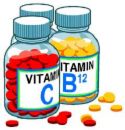
23349167291.jpgScience is ever-changing. One study should not make one take a pill just because it shows the drug to be beneficial. Any research should be carefully done and reviewed and if published in a reputable peer reviewed journal then its worth a second look!

The story about antioxidants and their benefits is one controversy. You may have heard a lot already about the benefits and side effects of Vitamins E and C but what is really the real score?  So before grabbing these vitamins… take to consider the facts below: 

The results of this study came from a meta-analysis of 68 randomized trials with a total of 232,606 patients published in the February 28 issue of JAMA.

  • Vitamin C does not appear to be detrimental but it is not beneficial either.  It likewise did not decrease or increase  mortality.
  • Trials of selenium showed it to be neither of benefit nor harm.

But the most striking results that I want readers to take note is that:

…. Vitamins A and E actually increased the risk for mortality whether it is used alone or in combination….

These data only point to one thing:

…That people should NOT take these over the counter supplements marketed as anti-oxidant vitamins in an effort to prevent illness…because…THEY DON’T!

…And as the usual cliche… we should instead” eat a balanced diet and take regular exercise“… as full proof to healthy living with NO SHORTCUTS…because…

Being Healthy Requires No Shortcuts!

Tips To Eat Less

May 4, 2007

imagesl.jpgThe main obstacle in losing weight is FOOD. The availability of tasty high caloric foods  in a glance within minutes within our sight anytime and anywhere tempts us to eat, savor the taste and enjoy! That’s how man was born to live! To work hard and enjoy the fruits of ones labor by eating a satisfying meal after a hard days work.  Unfortunately… we enjoy the food so much and its overabundance has lead to a lot of suffering instead! 

BUT…by eating well and balancing the kinds of food and taking time to consider what to eat and how much during each meal should make a difference long term. 

I found this interesting  article on tips on how to eat small from the April issue of the Mayo Clinic Health Letter which I want to share: 

  • Select smaller bowls, plates and spoons for serving and eating. Research has shown that people eat more when food is served in or eaten from larger dishes.
  • Get rid of high-calorie leftovers; store them in inconvenient locations or in opaque containers. — Seeing a calorie-laden goody can trigger the desire to eat. Food in the basement pantry is less tempting than leftovers on the kitchen counter. Weight loss is easier when healthy, low-calorie foods are within sight and easy reach.
  • Buy small packages and serve or order small quantities. Larger packages or larger portions often lead people to eat more than they would if the serving or package were smaller. After serving appropriate portions, put leftovers away immediately or, at a minimum, keep the serving dishes off the dining table.

Actually, we know these tips exist but constant reminder may help us follow these tips if we are really serious in our quest for…

Better Health Through Healthy Weight!