Archive for the 'Lifestyle Measures' Category

Tips to Overcome WORRY…

June 18, 2007

2741649040.jpgEver so often I have patients who worry too much on something that for me is so trivial that needs no worrying.  To worry can be normal but prolonged worrying can be bad!  The stress hormones associated with worrying can result in long term harm to ones body. I beleive in counting my blessings first before I start to consider if this thing is worth my worrying or not!

Worrying from time to time is normal, even healthy, because it is the body’s way to respond to threatening situations. But be careful because if this continues for long this will lead to anxiety and panic attacks and the obsession of something is going to happen to you will occupy your whole self leading to a destructive self image.  How then can we deal with worries?

Here are some tips that I got from the Harvard Health Beat:

What If You Are Just Plain Worried?

Not everyone who suffers from frequent worry has an anxiety disorder. If you don’t have anxiety disorder, but think you worry too much, the following advice may help. Practice relaxation techniques. Listen to music or to relaxation recordings to take your mind off whatever is worrying you. Or try progressive muscle relaxation.

Exercise regularly. Studies have found that exercise improves mood and modestly decreases anxiety symptoms. Aim for at least 30 minutes of moderate activity on all, or most days.

Consider biofeedback. Biofeedback helps you become aware of your body’s responses to stress and teaches you control them using relaxation and cognitive techniques.

Think twice: Is it worth my time? Is it worth my worry?

Count Your Many Blessings and Ask: Do I Need To Worry?

Yoga and Your Weight…

June 13, 2007

2622133215.jpgExercise your body has been shown to help lead healthier lives.  But there may be some exercises which make a person more inclined to eat.  It is now known that aerobic exercises like running can trigger this response.  But a study conducted on yoga proved this to be a better option in helping patient maintain weight or be conscious of their body image resulting in weight loss.

But waht is Yoga?  According to Wikipedia: Yoga is a group of ancient spiritual; practices that originated form India and has become primarily associated with the practice of asanas  or postures.  You can see several yoga centers anywhere in the world but I have only come accross this article only now that looked at the benefit of yoga on weight.

It is said that “Yoga may make women feel better about their bodies, steering them away from eating disorders.”, according to a  new study  published in Psychology of Women Quarterly by affecting the mind-body relationship.  Likewise, yoga may actually help prevent and treat eating disorders.

In the study, the authors compared women who practiced yoga regularly with those who did other forms of exercise. Women who hadn’t done either form of exercise for at least two years were also included.  The result showed that yoga indeed can affect a persons attitude to self image and may in fact affect bad eating habits that may lead one to gain weight.

Here’s one tip for those desiring to exercise but is confused as to what regimen to use.  Is Yoga good for you?  Well based on this study… it has benefits.  Its a form of mind and body relaxation and an activity that may prove to work for you! 

Cheers To Yoga!

Sleep and The Risks of Obesity and Diabetes…

June 9, 2007

One of the highlights of the Endocrine Society meeting that I attended just this week in Toronto Canada was  a plenary session on Sleep Debt and the Risk of Diabetes and Obesity

While reading Canada’s daily newpaper, the headline was that… companies are now allowing their workers also to take a nap in between work schedules with nap stations in their offices to allow workers to relax and sleep and be more productive as a result.  Suggesting that sleep debt is actually affecting productivity in the work place!

BUT how much sleep is healthy? or how many hours of sleep are needed to reduce diabetes and obesity risks? 

The magic number is 7 hours!!!

A study published in Diabetes Care this March of 2006 showed that  men who got little sleep (< 7 hours ) or a lot of sleep (8-10 hours) were more likely to develop diabetes than men with 7 hours of nightly sleep.  The same token people with less than 7 hours of sleep have a 23% to 73% increased risk of obesity!

But quality of sleep is also as important. Deep sleep is a must.  Even 7 hours of light sleep may do no good but harm.

Again the stress hormones may be responsible as more activation of the sympathetic nervous system resulting in overproduction of cathecholamies may be result in the increased risk.  Likewise, obesity may follow if you sleep less because you easily feel hungry and you tend to eat more if you’re awake!

So…..

Sleep Well and Be Well!

Knowing Your BMI Means Taking Action To Be Healthy….

May 23, 2007

ca_fatheart_car.gif

This is an important chart for everyone to keep just to trace where our BMI is going! Up or Down! 

The International Obesity Task Force also came up with standards to follow for the Asia Pacific Region which calculates a lower BMI for the Asian population as overweight and obese

Why do we need to know our BMI? Because it calculates your health risk.  And more importantly, this tracks your progress in losing weight and therefore for every one point drop in BMI translates to a concomitant reduction for its associated disease risk especially early mortality….  Studies have shown that: if you’re obese your risk to die early is high! 

Remember…

Knowing the Numbers Means Wellness…

Read My Other Related Posts:

The Health Benefits of Visiting The Beach….

May 21, 2007

boracay-at-night.jpgWe all heard of Boracay… we all heard of the pleasures of going to a beach, enjoy the breath of fresh air, the crystal clear waters, the white sands and the fun!  Indeed… these things are true with Boracay.  Ive been to different resorts and I agree that nothing beats the beach of Boracay!  Except probably for El Nido in Palawan, the beauty of Boracay stems not only from the white sand beach but more so… the people, the view, the sunset and whole of what the place brings…

another-castle.jpgNo pollution, no factories, no litter ( or else you’re fined) and literally you feel so safe strolling down the stretch of white sand beach up to dusk!  People know that tourists are their means of livelihood so everybody tries to protect them from getting harmed! You just feel so relaxed and so free from all the hassles of everyday life in the city.  For me, this brings to what we doctors always recommend to our patients to explore a a stress free environment especially to people who have no time to sleep, think a while about themselves and their families and just take time to sit down, enjoy the view, the sun and have fun!  This whole experience can really rejuvenate oneself and help boost one’s immune system to help help fight long term chronic diseases like cancer, depression and infections.

I however recommend to visit the place in times where there are not much crowd.  If you want to explore Boracayand enjoy the benefits of what relaxation can bring, then avoid going there in December or in April.

sunset.jpgMy visit to Boracay this weekend was perfect.  Not only was I able to share some tips on how to manage Diabetes to fellow doctors coming from Bacolod and Iloilo but also had time to explore the place and relax with my family who enjoyed every minute of the experience.  I enjoy teaching so I welcome sharing what I know to fellow doctors all over the country because not only am I able to live my advocacy of sharing my expertise in the field of endocrinology but also the chance to visit places in our country far better than in other parts of the world! ( Click on the pictures that I took during my visit to see how beautiful this place is.)

Lastly…Dont ever miss the beautiful SUNSET of Boracay!  It’s worth the visit and time!  Truly this place can work wonders to help us feel better and healthier!

A Breath of Fresh Air Is Worth A Thousand Cure!

New Guidelines for Obesity

May 18, 2007

2504513455.jpgObesity is becoming a pandemic.  Worldwide, different health institutions are trying to formulate plans to hopefully and successfully combat this problem.  I often ask my patients to check the degree of obesity becoming a reality in our surroundings.  Since it’s summer, if you go to a pool or a beach, check the number of children you see as obese and you”ll really come to realize the increasing prevalence in our local setting.  I thought of this as a screening test for the growing number of obese people…because I’ll definitely do this thing when my family will enjoy the beach of Boracay this weekend! Nope I’ll not be doing this because I have other plans for my eyes to feast on ….

Recently, published in the April 10 issue of the Canadian Medical Association Journal is the fhe first-ever Canadian Clinical Practice Guidelines (CPG) on the Management and Prevention of Obesity in Adults and Children.   The group specifically recommends that waist circumference be measured along with height and weight.  Furthermore the guidelines also recommend that:

* First-line treatment for overweight and obese adults should consist of diet changes and regular exercise, supported by behaviour change; if unsuccessful, treatment with medications or bariatric surgery should be considered;

* Starting at 10 years of age, overweight or obese Canadians should undergo screening that would include tests measuring levels of fasting glucose, HDL (the good) and LDL (the bad) cholesterol, and triglycerides (a form of fat in the blood) levels. Furthermore, they should be monitored at regular intervals;

* Patients participating in weight management programs should be provided with education and support in behaviour modification techniques as an add-on to other lifestyle modifications;

* Programs to promote healthy, active living and to prevent overweight and obesity should be implemented in schools to reduce the risk of childhood obesity; these include interventions to increase daily physical activity through physical education class-time and opportunities for active recreation;

* “Screen time” (e.g. television watching, and video or computer games) should be limited to less than two hours per day to encourage increased activity and less food consumption, and to limit exposure to food advertising.

We all know them to exist.  I have written about them in previous posts.  But the problem is the implementation of the guidelines.  Unless our government helps in implementing them, and more marketing strategies by private and public entities that promote healthy lifestyle, these guidelines will remain as guidelines meant to inform and never practiced!

The American Association of Clinical Endocrinologists, Philippine Chapter of which I am a Board Member will definitely make this thrust an active part of our advocacy in promoting healthy lifestyle among the school children.  So watch out for us in some private schools nationwide as we will really be actively involved in this Fight!  For those interested, please contact me through this post and inform me of your interest for the group to make your school be part of this program.

Be Involved … Be Our Partners in Our Fight Against Obesity! 

Can Fruits Cause Obesity?

May 15, 2007

imagesfrd1.jpgWe love fruits.  Being a natural source of sugar, we believe it is harmless in most ways. In fact you may have heard friends who tell you that they lose weight because they are on a fruit diet!  But too much of a good thing can turn out bad especially if over-consumption becomes a habit rather than an exception.

Recently though, the notion that fruits is generally okay has been challenge especially in the field of obesity.  Apparently, in animal studies, researchers from the University of Florida have found that fructose tricks your brain into thinking that you are hungrier than you truly are, causing you to eat more to feel satiated. The pathway at which fructose may be responsible for the rising epidemic of obesity is published in Nature Clinical Practice: Nephrology.

While it is common knowledge that the common causes of obesity includes the intake of high-fat, high-calorie foods and forgoing exercise, the concept of fructose as one culprit has never been on top of the list to determine if this sugar is in fact an underlying cause of metabolic syndrome, a condition that is linked to type 2 diabetes and obesity.

Fructose is present in many foods that we eat including the high fructose corn syrup to soft drinks, the jellies our children love , the pastries,  the tomato or banana ketchup and other commonly used products.  It is estimated that fructose consumption has risen more than 30 percent since the 1970s which coincided with the rise in the rate of metabolic syndrome and obesity worldwide.

But can fruits cause obesity? No link of that yet but again… eating a balanced meal with a fruit serving per meal should not make one gain weight MORE than the benefits of fruit consumption you’ll get!  But the general rule on fruits is: The Sweeter…The More Fructose…The More Calories!One Fruit Per Meal Is The Deal!

How Much Caffeine is In Our Drinks?

May 10, 2007

2333326284.jpgWe know caffeine is a stimulant.  Therefore we tend to grab a cup of coffee everytime we feel we need a jolt out of our daily routine resulting in exhaustion or just mere tiredness.  But researchers have warned us about too much caffeine because of its health dangers including the effect of caffeine on the heart and bones as well as our ability to take a good sleep.  Likewise studies have shown too much caffeine can lead to stomach problems like ulcer or esophagitis.  People who likewise drink Energy drinks should also be cautioned because all they contain are sugars and caffeine.

Students trying to cram for an exam should be warned of the palpitations and jitteriness that they will feel if their body is loaded with caffeine.  On the other hand, those wanting to have a good sleep or the insomniacs should limit caffeine during the 4 to 6 hours before bedtime.  It is estimated that approximately 50% of the caffeine consumed at 7 PM remains in the body at 11 PM…the time frame that we want to go to bed!

One may actually be avoiding coffee per se to avoid problems with sleeping but remember that caffeine can be present in many different foods, beverages and medications.

Coffee (5 oz. cup)
Brewed, drip method 60 – 180 mg caffeine
Instant 30 – 120 mg caffeine
Decaffeinated 1 – 5 mg caffeine
Tea (5 oz. cup)
Brewed 60 – 180 mg caffeine
Instant 25 – 50 mg caffeine
Iced (12 oz. Cup) 67 – 76 mg caffeine
Chocolate
dark/semisweet 1 oz. – 5 – 35 mg caffeine
Soft drinks
cola (12 oz.) 36 – 47 mg caffeine
Non-prescription drugs
Dexatrim 200 mg caffeine
No Doz 100 mg caffeine
Excedrin 65 mg caffeine

But drinking coffee per se has many health benefits including the possibility of preventing diabetes and liver and other ailments as well as help us lose weight.  And therefore…Just as always…we recommend drinking or taking anything or even doing things in Moderation is the key to prevent dangers because…

Too Much Of A Godd Thing Can Turn Out BAD!

Read My Other Related Posts:

The DANGER of Taking Antioxidants…BEWARE!

May 8, 2007

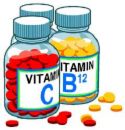
23349167291.jpgScience is ever-changing. One study should not make one take a pill just because it shows the drug to be beneficial. Any research should be carefully done and reviewed and if published in a reputable peer reviewed journal then its worth a second look!

The story about antioxidants and their benefits is one controversy. You may have heard a lot already about the benefits and side effects of Vitamins E and C but what is really the real score?  So before grabbing these vitamins… take to consider the facts below: 

The results of this study came from a meta-analysis of 68 randomized trials with a total of 232,606 patients published in the February 28 issue of JAMA.

  • Vitamin C does not appear to be detrimental but it is not beneficial either.  It likewise did not decrease or increase  mortality.
  • Trials of selenium showed it to be neither of benefit nor harm.

But the most striking results that I want readers to take note is that:

…. Vitamins A and E actually increased the risk for mortality whether it is used alone or in combination….

These data only point to one thing:

…That people should NOT take these over the counter supplements marketed as anti-oxidant vitamins in an effort to prevent illness…because…THEY DON’T!

…And as the usual cliche… we should instead” eat a balanced diet and take regular exercise“… as full proof to healthy living with NO SHORTCUTS…because…

Being Healthy Requires No Shortcuts!

Tips To Eat Less

May 4, 2007

imagesl.jpgThe main obstacle in losing weight is FOOD. The availability of tasty high caloric foods  in a glance within minutes within our sight anytime and anywhere tempts us to eat, savor the taste and enjoy! That’s how man was born to live! To work hard and enjoy the fruits of ones labor by eating a satisfying meal after a hard days work.  Unfortunately… we enjoy the food so much and its overabundance has lead to a lot of suffering instead! 

BUT…by eating well and balancing the kinds of food and taking time to consider what to eat and how much during each meal should make a difference long term. 

I found this interesting  article on tips on how to eat small from the April issue of the Mayo Clinic Health Letter which I want to share: 

  • Select smaller bowls, plates and spoons for serving and eating. Research has shown that people eat more when food is served in or eaten from larger dishes.
  • Get rid of high-calorie leftovers; store them in inconvenient locations or in opaque containers. — Seeing a calorie-laden goody can trigger the desire to eat. Food in the basement pantry is less tempting than leftovers on the kitchen counter. Weight loss is easier when healthy, low-calorie foods are within sight and easy reach.
  • Buy small packages and serve or order small quantities. Larger packages or larger portions often lead people to eat more than they would if the serving or package were smaller. After serving appropriate portions, put leftovers away immediately or, at a minimum, keep the serving dishes off the dining table.

Actually, we know these tips exist but constant reminder may help us follow these tips if we are really serious in our quest for…

Better Health Through Healthy Weight!

Attacking Childhood Obesity: A Major Emergency!

April 27, 2007

imagesdfghj.jpgHere are some important facts I read in the book Food Facts by Dr Brownwell on childhood obesity.  If the facts wont make you wonder what the hell are we doing to the kids…am not sure what will make us wake up to take a closer look at the health consequences of obesity in children….

  • Prevalence of childhood obesity : Increased by 3 fold in US & England; 4 fold in Australia and Egypt
  • Overweight children who develop Diabetes may have heart attacks and need Bypass surgery before they reach age 30!!!!
  • In France; obese children had stiffer arteries and unhealthy changes in the arterial lining… important early findings before they develop stroke.
  • In Canada: obese children who develop Diabetes before the age 17 were experiencing blindness, amputation and kidney failure including premature death as young adults.

Remember… parent have the responsibilities to track the weights of their children.  We are responsible for what we feed our kids.  Simply put…research has shown that…. 

  • Parents diet and exercise patterns predict the child’s likelihood of being overweight giving rise to the term: OBESIGENIC Families…

 Look around the school grounds or the shopping malls… obese parents are strolling around or eating fried chicken with their obese kids inside a fast food resto. Obese parents beget obese kids…what we eat and do is what we show our kids and they then follow what we do even if they’re wrong or unhealthy!

The good news is according to Dr Brownwell, research shows that children can be persuaded to eat healthy foods and be able to differentiate between ” persuasion” and “information”:

  • Children who watched public service announcements focusing on nutrition chose more vegetables and fruits.
  • A Canadian study showed children ages 5 to 8 picked more candy than fruit following a candy commercial but showing fruit commercials encouraged children to eat more fruits.
  • A Stanford study showed reduction in TV time decreased the frequency of meals eaten while watching resulting in effective weight control.

The above studies therefore prove that as parents we have the say as to how to shape our kids future health! My kids rooms have no cable TV as a result less viewing time to watch Nickelodeon or Cartoon network and more play time and more activities. Now that its summer, I join them in swimming and do at least 10 lapses across my pool while playing and swimming leisurely in between. I likewise do swimming competition to make them do lapses while enjoying the fun on their faces by making them win! Walking together or biking should do the same in terms of bonding and increasing activity.

Lets take care of our kids.  Obesity among our kids is now becoming a medical emergency…let’s all act together before this becomes a global pandemic!

Loving Our Kids Does Not Mean French Fries As Treats!

A Way To Permanently Remain THIN

April 25, 2007

3582380440.jpgHave you experienced being envious to a friend who eats but never gets fat?  It may really be in the genes but now a new study can make this a reality if the problem is resolved early in life.  We know that by the time we drink milk… we see babies getting bigger and bigger because of the saturated fat and the high sugar content in full cream milk.  Once the habit of over feeding is in place… then the difficulty in losing the accumulated fat results when we reach adulthood.  Needless to say, the parents or the grandparents just want the babies to look fat so they can look CUTE!

29037632431.jpgIn a recent article published in the January 2007 issue of the American Journal of Physiology, incorporating LEPTIN in a baby formula resulted in subjects remaining slim with lesser chances of developing obesity related illnesses like diabetes even on a high fat meal.

Leptin, a breakthrough hormone in the field of obesity is the fat hormone that turns off hunger in the brain.  In the study, the rat subject fed with formula supplemented with leptin, remained slim even if they were fed with high fat diet!  SOUNDS GREAT! 

 This is the first study that looks so promising that incorporating leptin in a meal may hopefully mean the end to our quest to combat obesity!  It is still far from reality but again this can lead to more studies to exploit the finding and hopefully be funded to become what we hope to be reality!

The studies therefore help us understand that the effect of leptin in a human body may start early in life even before we are born.  In fact, feeding the hormone to pregnant rats resulted in a  animals born to remain lean even when fed a high fat diet, compared to animals born of untreated mothers suggesting the impact of leptin in the developing fetus!  The authors believe that “the difference boils down to energy expenditure. such that the offspring of leptin-treated mothers burn up more energy.”

More good news to us who love food and want to remain thin! The thought of just putting a pinch of leptin to a pound of steak of a pan of pizza seems Magic!

BUT…definitely for now… the recommendation remains: 

…eat the right food….

…..exercise daily and live positively…

Stay Healthy To Be Wealthy!

How Much Sugar Is In My Food?

April 20, 2007

imagesasdf.jpgAlmost any food we eat may contain sugar.  Even those with marketing ads saying the product is sugar free…may actually mean “no added table sugar” BUT contains other sources of sugar hidden under a different name so BE AWARE! 

It is important to remember that sugar can come in many forms.  You may think you are eating sugar free foods but hidden in the ingredients are the likeness of sugar that can still contribute to calories.

Sources of sugar that you should check in the food labels include the words that end in “ose” or “ol” . These are all forms of sugar. Very important to note is that syrups such as corn sweetener, sorghum syrup and high fructose syrups are sweeteners that are often added to drinks and therefore high in calories.  Remember also that brown sugar, molasses and honey are said to be better than regular sugar because they are “natural” but they all give you the same calories as regular table sugar! So BE AWARE!

Common sources of sugar added to our daily food include:

  • fructose
  • high fructose corn syrup
  • maltose
  • lactose
  • dextrose
  • mannitol

When you read food labels, take note that the Ingredients listed: they are usually in order by weight, meaning from the most to the least amount. So when a type of sugar is the first ingredient, you know there is more sugar in that food than any other ingredient. Likewise some foods may contain more than one kind of sugar so when they are added up, the total may be more than any other ingredient in that food. So BEWARE!

Lastly…One important  fact about sugar that I want everyone to remember and share:

One culprit of a bad “food” that we all at one time or another have “enjoyed” is softdrinks.  But . we may not be aware that a 12-ounce can of cola contains about ten teaspoons of sugar which actually provides more calories and put on more body fat than the same amount of table sugar taken dry by the spoonful !

Sugar in the body can cause tooth decay, diabetes and more importantly OBESITY! Be more attentive to what you eat or drink because you may actually be taking hidden sugars that you thought were non existent!

Sugar in Your Food: Beware and Be Aware!

Check My Other Related Posts:

The Seattle Experience: The Depression Factor

April 19, 2007

1ebfscd.jpgJust came back from a fruitful and educational meeting in Seattle where I attended the Annual Convention of the American Association of Clinical Endocrinologists.  I was therefore off my usual schedule in updating my blog.  Attending the AACE meeting also afforded me the chance to say hello to my mentors at Mayo especially this year where more than 8 of the plenary speakers and workshop facilitators were my former mentors at the Mayo Clinic. 

I also make it a point to also explore the place in between serious learning to learn more about the people and the culture  especially Seattle where we heard most from the movie Sleepless in Seattle.

It is indeed true that it rains 70% of the time in this part of the world.  It was almost always cloudy and that there was only 1 day out of 7 that I saw the sun!  In fact the newscaster was saying …” this is your chance to get out and enjoy because were not sure when the sun will come out again”.

The place reminds me of an important and yet unrecognized aspect in treating hospitalized patients. When I see patients in the hospital and if I know that  they will be there for quite sometime, I usually request them a room with a window.  For me light therapy is as important as my medications. It is not easy to be hospitalized and be worried about the illness.  Therefore being able to enjoy and see the light from the sun can be a bonus to early recovery.  This is already known in the world of depression especially during winter wherelight therapy in fact has been shown to be as effective as antipsychotic medications in the treatment of depression.  And experience wise… it almost always works.

The Seattle Experience therefore brought back memories of my days in Rochester Minnesota where winter is at its worst and therefore light is at its minimum.  Beautiful places but nothing beats the SUN in Cebu!

So if you have the chance… enjoy our year round sunlight.  Its one beautiful bonus that we have which we seem to take for granted.  The sun gives us the perk we need to stay alert,and  the Vitamin D we need to help our bones and muscles strong.  Unfortunately…as is true to everything we own… be it a person or a thing…we only start missing the value of a thing or a person when they’re gone!

The Seattle experience made me take a second look at Cebu and value each day that we have the sun! Enjoy the benefits of it … be it for fun or for health!

Beat Depression…Enjoy the SUN! 

Tips To Avoid Getting Tired…

April 9, 2007

2950510993.jpgGetting tired has a lot of reasons.  But it may signal an illness especially diabetes or an underactive thyroid gland.  Most often however, patients start to consult us when the feeling of tiredness last more than 6 months which obviously may mean something else.  It is imprtant to remember however that tiredness can also happen during the normal changes in our lives…like stress from work or family, during menopausal state or just due to aging.

Eat for energy : a Health Tip From the Harvard Medical School

The tried-and-true advice for healthful eating also applies to keeping your energy level high:

• Eat a balanced diet that includes a variety of carbohydrates, proteins, and fats with an emphasis on vegetables, whole grains, and healthy oils. Taking a daily multivitamin will ensure that you get the vitamins and minerals you need, but taking extra amounts of individual nutrients won’t give you more energy.

• Eating certain types of foods in particular amounts can help prevent fatigue. Because different kinds of foods are converted to energy at different rates, some — such as candy and other simple sugars — can give you a quick lift, while others — such as whole grains and healthy unsaturated fats — supply the reserves you’ll need to draw on throughout the day.

• Eat small, frequent meals. Where energy is the issue, it’s better to eat small meals and snacks every few hours than three large meals a day. This approach can reduce your perception of fatigue because your brain, which has very few energy reserves of its own, needs a steady supply.

Reduce stress

The most common cause of persistent fatigue is stress and the emotional response to it. People who feel fatigued most of the time don’t necessarily have more stress in their lives than other people, but they may be more sensitive to its effects. Stress-induced emotions consume huge amounts of energy. Relaxation therapy can be an effective tool for reducing stress and naturally boosting your energy, particularly when used in combination with cognitive behavioral therapy. Meditation, self-hypnosis, yoga, and tai chi are all relaxation techniques. One of the easiest techniques to use is progressive muscle relaxation, which involves systematically tightening and releasing sets of muscles, beginning with your toes and progressing up your legs, torso, hands, and arms. You might also consider other relaxation therapies, including aromatherapy and massage.

My Advise? 

Be Bappy, Relax So You Can be “Tired-Free”

Read My Other Related Posts:

The Practice of Eating Low Fat ….

April 7, 2007

This week since Thursday has been a long holiday in our country as we celebrate the Holy Week in commemoration of the Death and Suffering of Jesus Christ.  As such… it is both discipline and our catholic practice to adhere to sacrifices by not eating meat and not to do things you like best like…blogging:). 

This practice is really good since you only are allowed: Fish and other seafood and vegetables! This is what I call the practice of losing weight that’s really low fat: fresh food mainly Fresh fish, Water and water to fill you up and veggies for fiber and lasting satiety!

Unfortunately though, by eating low fat does not allow one to eat as much as we want.  The cartoon below sourced from Crazy Laughs Website illustrates the point I want to make!

391.jpg

I just hope everybody after this week will continue to practice the way of healthy eating and onward to a healthier way of life!  Thanks to Holy Week!

Remember… Fresh Fish…Veggies and Plenty of Water!

The Importance of the Flu Vaccine

March 26, 2007

4184332892.jpgIt’s the time of the year that flu vaccination is again recommended. For the year 2007 … it is now recommended earlier this March due to three new strains of viruses expected to affect the region for the year.  So how can we protect from this infection and who should get the vaccination?

The Centers for Disease Control and Prevention  recommends annual influenza vaccination for the following:

  • anybody age 50 and older;
  • children ages 6 months to 59 months;
  • women who will be pregnant during flu season; and
  • adults and children with other chronic conditions like diabetes, asthma, high blood pressure

Patients with cardiovascular disease are of special concern since according to a recent American Heart Association guideline and advisory …. they are more likely to die from influenza than patients with any other chronic condition.  It is for this reason that one particular group of patients at risk are the diabetics who by the time of diagnosis most likely have cardiovascular disease already!

The advisory further noted: 

Overall, influenza is responsible for 36,000 deaths and 225,000 hospitalizations in the United States each year.  People with cardiovascular disease are particularly vulnerable, because the flu can exacerbate heart disease symptoms directly, and can also lead to conditions like viral or bacterial pneumonia that cause flare-ups of cardiovascular disease”. Influenza vaccination is now recommended with the same enthusiasm as cholesterol and blood pressure control and other modifiable risk factors for cardiovascular disease” 

Remember though that those who got last year’s shot should have a repeat vaccination this year because last year’s shot won’t offer protection this year.  Every year, the dominant strains of influenza virus change and therefore new vaccine is made for the particular year.  

So if you have diabetes, high blood pressure, asthma or any diseases that requires life long medications….

Keep Yourself Protected: Get The Vaccine!

How Safe is A FRIED Chicken: Check if Its Cooked with Trans FAT!

March 22, 2007

1937790063.jpgTrans Fat is actually a partially Hydrogenated Vegetable oil- described by some as a man made toxin. It was actually developed as a “healthy” alternative to animal fat!  It became so popular for sometime because this is the kind of fat that can give your chicken the Crunchy feeling and great taste and the pastries a longer half life. Perfect combination of a good tasting meal and longer shelf life…definitely good for business!  But Wealth Is NOT HEALTH!

SO what’s wrong with Trans Fat?

  • Just 2.6 grams a day of trans fat raises your risk of heart disease.  That’s about half as much as you get in a typical serving of french fries.  Thus it is considered as one if not the unhelathiest Fat!
  • We are presently battling the epidemic of obesity and this trans fat may actually be one culprit because it is super fattening. It has been shown that Trans fats build up belly fat themselves resulting in the “beer belly” appearance.  Likewise trans fat also cause fat from other parts of your body to move to the belly.  Whew…. really a Bad Fat! 

Remember… accumulation of fat in the abdomen is particularly dangerous because it contributes to heart disease and insulin resistance state which can lead to diabetes, high blood pressure and the so called Metabolic Syndrome.

The good news is:

  • A lot of the junky foods that we love to eat that used to have lots of trans fat like the famous Oreo cookies — are now trans-fat free. Yahoooo!
  • Fast-food restaurants are now adopting measures to reduce or eliminate trans fats.

So the next time you order crunchy chicken…. please be aware if the food is being cooked trans fat free or if it is in fact cooked with one!  As a consumer … you have to right to know because it’s your health and the health of your kids that are at stake here!

Make sure to be careful with oredering fried chicken in areas where no labels are posted especially on sidewalks.  The cook themselves may not even know what kind of oil they are using.  The Blind making the Ugly….

The Ugly and The Fried!

The Way To Lose Weight: Japanese Style!

March 19, 2007

3197292687.jpgMy wife and I just had a 4 day cultural sight seeing visit to Kyoto, Nara then Osaka.  I consider this trip one of the best I had so far.  (I will soon post these sights in my travelogue blog so try checking it out what these historic sights of Japan can offer.) But one thing that really bothered me in this trip is that...There’s no DIET COKE in Japan!

If you try watching the Japanese in the streets, except for the Sumo wrestlers, they are all slim! I havent seen a single japanese whom I consider obese or overweight.  It must be their diet and their way of living and lifestyle.

This trip of ours was purely cultural.  We stayed in a Ryokan house where we slept in the floor.  Fortunately we had our own private bath but otherwise it would have been in a public bath where clothes are a NO NO!  2011165386.jpgWe were then entertained by true Geishas in Gion district and had a chance to be served food by them. We ate traditional japanese food from breakfast till dinner.  And this is where you will realize that traditional japanese servings are really small!

Kaiseki- ryori which is Japan’s artistic and seasonal way of serving food that uses the freshest ingredients of the season…says it all. It was like an eleven course meal but every dish was artistically presented in small servings that by the time you reach the fifth serving you are already full. 

The concept of losing weight by eating little and slowly may have come from this tradition.  Since the foods are served in small quantities then you have the liberty to really taste each bite and enjoy the food!  We were not feeling deprived but in fact it was the opposite… we ate in small servings but boy… we were literally satisfied!

Even in their buffet … you are offered a small plate.  Not the usual plate we have in our own homes. And the chioces are filled with seaweeds, raw fish and other seafoods.  What’s interesting though is the small serving sizes they offer including the desert.  The fruits are offered to you only 1 slice of each including their yummy chocolate cake… a small really small slice that is only enough for one bite!

Now I know why when you order Diet Coke?…. you are faced with a blank stare! It’s an unknown entity in Kyoto! 

Let’s all learn from the Japanese way of eating

  • eat in small portions 
  • use small serving plates and
  • eat slow to allow some time to taste each dish before another one is served!

It’s the our discipline and lifestyle that matters! 

Foods To Eat If You Are a Diabetic: Part 2- A Simple Meal Plan To Also Lose Weight

March 12, 2007

3678081641.jpgI often find a lot of my patients having second thoughts when they see a meal plan… and when you ask them the next visit… it’s almost totally ignored.  The trick that often works is to simplify a regimen whether you are talking about a diabetic meal plan or for weight loss.  Choices should be better with more options to be free to choose and change.

When I see a diabetic patient or any patient that I deemed prediabetetic or at risk to become one become he or she is obese, than I usually challenge them to make a simple meal plan that they can follow. 

MY simple rules are:

  • Stop once you fell full! 

  • Eat at a specific time and eat even if you’re not hungry. The main reason we recommend eating in between for snacks is so that you wont feel hungry before lunch or dinner then as a result you are more prepared to be disciplined enough to eat the right kind and the right amount.

  • Make sure to eat breakfast and dont attempt to lose weight by eating one meal a day only!  This attempt will backfire and make you even more obese.

  • Use a small plate and fill it up with rice, meat or fish, vegetables and a fruit. Once you have finished the meal…then stop because for sure you are already full!  Don’t grab for something else because it’s obviously out of the urge to eat more.  Stand up and leave the dining table AT ONCE!

  • Make sure to eat snacks in between to prevent you from becoming hungry in between.

  • If you still feel hungry after the meal, grab for more vegetables or additional half of an apple.

  • Drink lots of water before each meal and afterwards

  • EAT SLOWLY… enjoy the taste of each bite!

  • It is usually the first and the last bite that we can remember.  So if you want to eat chocolate: eat 1 bite before the start of the meal…then eat a bite of the cake after the meal!  Is this a compromise or what!

  • Some free foods ( with less than 5 gms of carb)that you can enjoy without adding much calories include: Bouillon or broth, sugar free 3 in 1 Coffee or tea, Diet soft drinks,  Sugar-free hard candy or Jell-O.  But make sure you spread out free foods throughout the day and not eat them in one sitting.

  • Obviously however…I want my patients to refrain from sugary beverages like ice tea, juices and soda drinks.

There you go… I havent specified what and how much to eat or how many grams or ounces of meat etc.  What’s important is: you have a cup of rice, a serving or two of meat ( lean preferably or even white meat), 2 cups of vegetables and a fruit!  It’s your choice of what kind!

If you dont follow a meal plan because it’s complicated enough…hope you can remember my simple rules! It’s may not be perfect or ideal but better than none … and works for me!

Do You AGREE?

Rules Need To Be Simple To Be Followed….

Read My Other Related Posts: